
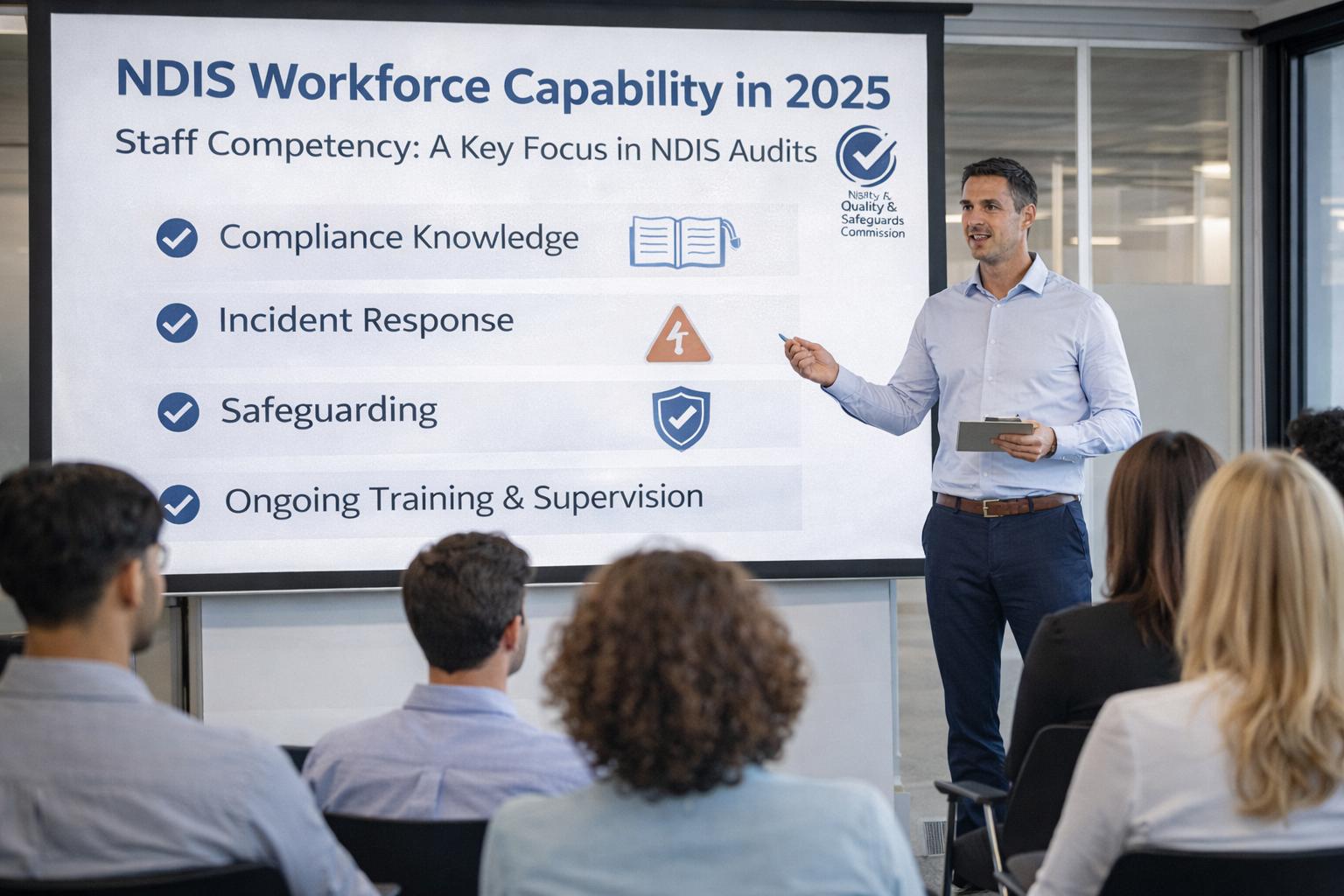
In 2025, NDIS compliance is no longer judged by policies alone — it is judged by people.
The NDIS Quality and Safeguards Commission has made workforce capability a key audit focus, with providers expected to prove that staff understand, apply, and consistently follow compliance requirements in practice.
Many providers fail audits not because documentation is missing, but because staff cannot demonstrate compliance knowledge during interviews.
This blog explains why workforce capability matters, what auditors look for, and how providers can strengthen staff competency in 2025.
Why Workforce Capability Is a Major Focus for the NDIS Commission in 2025
The Commission now closely assesses whether providers:
- Train staff regularly
- Supervise and support workers
- Monitor staff competency
- Ensure staff understand safeguarding, incidents, and complaints
Workforce capability is directly linked to:
- Participant safety
- Safeguarding outcomes
- Audit performance
- Organisational governance
👉 See how this aligns with broader NDIS compliance best practices.
What Workforce Capability Means Under the NDIS
Workforce capability refers to a provider’s ability to ensure staff:
- Understand their NDIS obligations
- Apply policies correctly
- Respond to incidents and complaints
- Protect participant rights
- Deliver supports safely and consistently
It is a core pillar of effective
👉 NDIS compliance management systems.
Common Workforce Capability Gaps Identified in Audits
NDIS auditors frequently identify:
- Staff unaware of incident reporting requirements
- Inconsistent safeguarding responses
- No evidence of training completion
- Lack of supervision or competency checks
- Staff unable to explain compliance procedures
These gaps often result in major or minor non-conformities, even when policies exist.
How to Build a Capable and Compliant Workforce in 2025
1️⃣ Clearly Define Roles and Responsibilities
Staff must understand:
- Their role boundaries
- Reporting lines
- Compliance responsibilities
2️⃣ Implement Ongoing, Documented Training
Training must be:
- Regular
- Relevant to staff roles
- Recorded as evidence
📘 Build staff knowledge through
👉 NDIS compliance training programs
3️⃣ Provide Supervision and Support
Supervision helps:
- Identify risks early
- Reinforce compliance behaviour
- Improve service quality
4️⃣ Monitor Competency and Performance
Track:
- Training completion
- Knowledge gaps
- Compliance understanding
💡 Integrate workforce monitoring into
👉 NDIS compliance management strategies
Why Workforce Capability Directly Impacts Audit Outcomes
During audits, assessors often:
- Interview frontline staff
- Ask scenario-based questions
- Test real-world compliance knowledge
If staff cannot explain:
- How incidents are reported
- How safeguarding works
- How complaints are handled
👉 Audit risk increases significantly.
✅ Prepare your workforce using
👉 NDIS audit preparation services
How Workforce Capability Supports Safeguarding and Quality
A capable workforce:
- Reduces incidents and complaints
- Improves participant outcomes
- Strengthens safeguarding
- Builds trust with regulators and families
Workforce capability is a direct indicator of organisational maturity.
Conclusion: Workforce Capability Is the Foundation of NDIS Compliance in 2025
In 2025, compliance success depends on what staff know, not just what policies say.
Providers who invest in training, supervision, and competency monitoring are better positioned to pass audits and protect participants.
At Compliance Care, we support providers through:
- Compliance training programs
- Audit preparation support
- Best-practice frameworks
- Ongoing compliance management
📞 Get expert support today:
Get NDIS compliance updates
Practical guidance on registration, audits and the 2027 wave. No spam, unsubscribe in one click.