
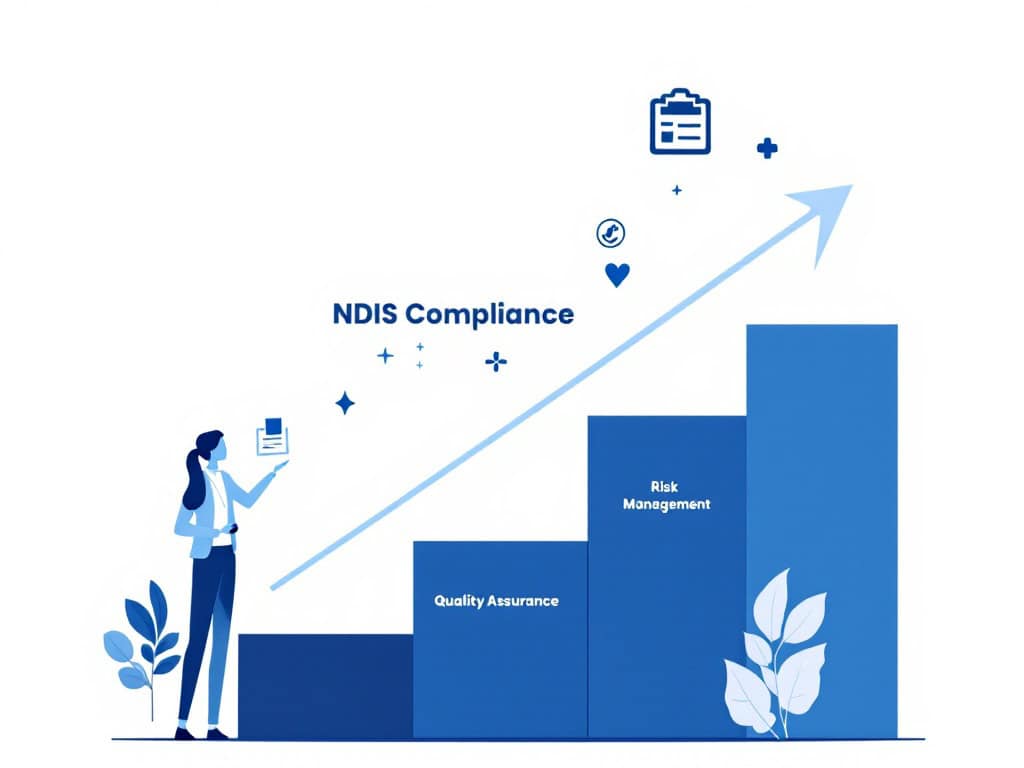
Growth does not add compliance work. It changes its shape.
The compliance system that carried a provider through its first certification audit is usually held together by one person who understands it. That is not a criticism — at a small scale it is the efficient answer, and it works. The reason growth destabilises compliance is not that there is more of it to do. It is that the arrangement which made it work, one person holding the whole picture, is the first thing scale breaks.
What follows is what actually changes as a provider grows, roughly in the order it changes, and what to do about each. None of it is about working harder.
First: the knowledge stops fitting in one head
The earliest failure of scale is not a missing document. It is a decision made by someone who did not know it was a decision.
Whether an incident crossed a reportable threshold, whether a support plan change needs a fresh consent, whether a practice is restrictive and therefore needs authorisation — these are judgements, and while the organisation is small they all route to the same person. As you add staff, they stop routing. A team leader at a second site makes the call themselves, reasonably, and does not know there was a threshold to check.
The fix is not more training in the abstract. It is writing down, specifically, which decisions must escalate and to whom. A short list of named triggers — the ones in the Commission's reportable incidents guidance, anything touching a regulated restrictive practice, any complaint that alleges harm — beats a policy nobody finishes reading.
Second: policy and practice come apart
An auditor tests your policy by asking your staff what they do. At one site, the answer is whatever the person who wrote the policy does. At three sites, the answers diverge, and they diverge quietly.
The usual mechanism is version currency. A policy is updated centrally, the master file is correct, and the printout on the wall at the second site is eleven months old. The document is compliant. The practice is not — and it is the practice that gets sampled when staff are interviewed.
Two things prevent it, and both are unglamorous: one location where the current version lives and everyone knows it, and a habit of asking staff what they actually do rather than whether they have read the policy. The gap between those two answers is the finding an auditor will write.
Third: the audit changes underneath you
This is the part providers are least often warned about. Certification is not a single event you pass and then repeat in three years.
The sampling pool grows. Audits sample: an auditor picks participants, dates and incidents and follows each through your evidence. More participants and more records means more that can be drawn, and the sample is not weighted in your favour. A provider whose evidence is ninety per cent sound is not ninety per cent safe — they are exposed to whichever ten per cent gets pulled.
There is a mid-term audit. Certification runs on a cycle with a check partway through, and it exists precisely to catch systems that stopped. A register accurate at certification and untouched since is not evidence of a working system; it is evidence of one that ran once.
Adding a registration group changes your scope. Registration groups determine which modules of the NDIS Practice Standards apply to you, and the requirements multiply rather than overlap. Providers routinely add a group for commercial reasons and discover the audit scope consequences afterwards. Check the module before you take the work, not after — the Commission publishes the audit types and what drives them.
Fourth: evidence has to be produced where the work happens
Small providers can reconstruct. Someone sits down before the audit and assembles what is needed from memory, email and paper. It is exhausting and it works, up to a point.
It stops working for a reason that has nothing to do with volume: reconstructed evidence reads differently. A progress note written at the end of a shift describes what happened. The same note written three weeks later describes what someone remembers, and an experienced reader can tell. Scale forces the question of whether your records are a by-product of doing the work or a separate task performed afterwards — and only the first survives sampling.
What to do, in order
If you are growing and want to spend the least effort for the most protection:
- Write the escalation triggers down and name who owns each. One page.
- Establish one current source for every policy, and check what staff actually do against it.
- Before adding a registration group, read the module it pulls in.
- Move record-keeping to the point of delivery, even partially.
- Run an internal sample the way an auditor would — pick three participants at random and follow them through — before someone else does it for you.
That last one is the highest-value hour in this list, and it costs nothing. Our NDIS compliance checklist is a reasonable structure for it, and names the evidence sampled against each obligation.
Where we fit
Two separate things, and you may need neither.
The consultancy work is gap analysis and audit preparation — someone reading your evidence the way it will be read at audit and telling you what is missing while there is still time. Policy development and ongoing compliance support are for organisations that would rather not hold the standards in-house.
If you want a straight answer about which stage above you are actually at, book a thirty-minute call. It is free, and a fair proportion of them end with us saying you are further ahead than you think.
Get NDIS compliance updates
Practical guidance on registration, audits and the 2027 wave. No spam, unsubscribe in one click.